If a soup could solve your problems, Traditional Italian Minestrone would be the one.
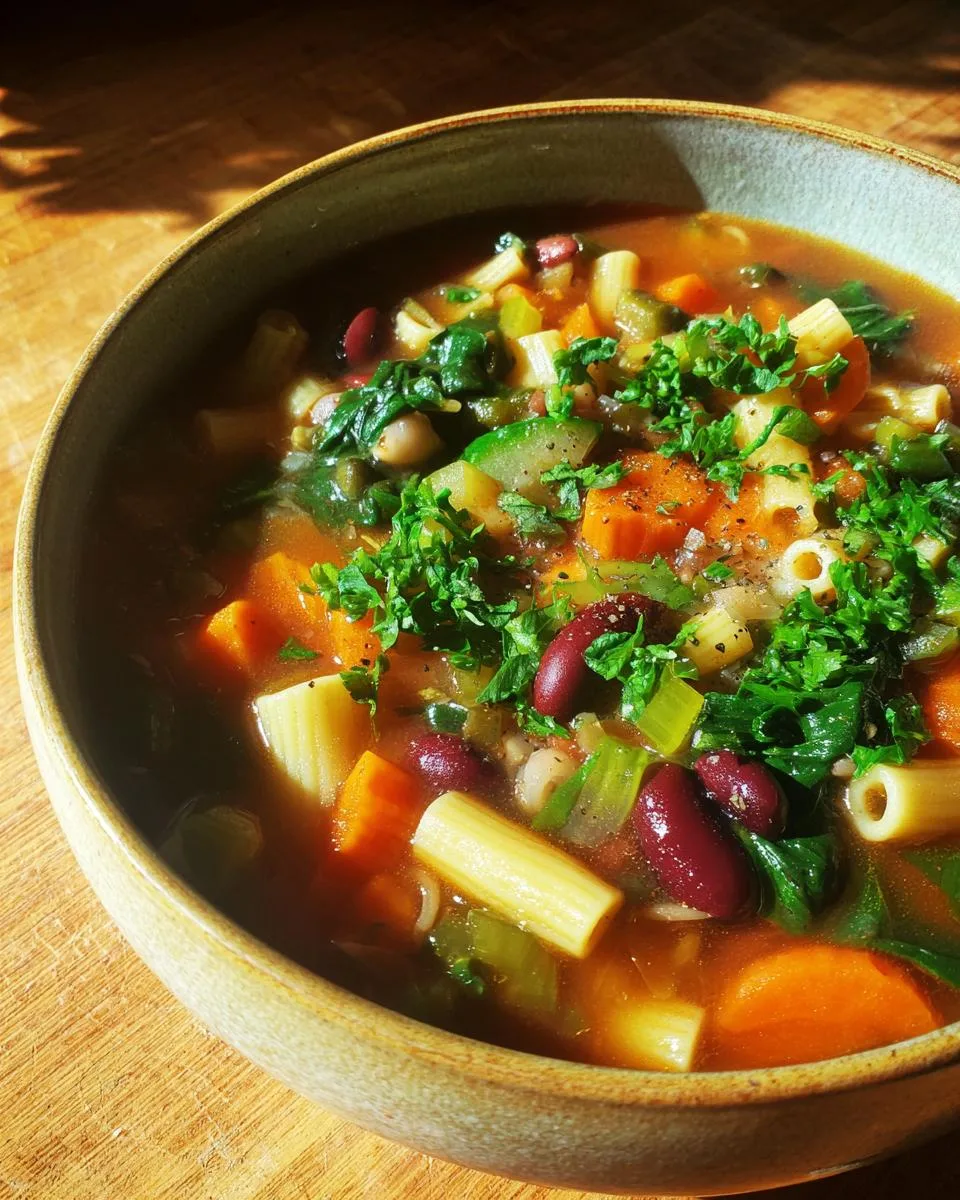
Table of Contents
Table of Contents
I still remember my Nonna at the stove, stirring her big, beat-up pot while garlic, tomatoes, and fresh herbs filled the whole house. She’d give me that little wink and say, “This soup fixes everything.” And honestly? She wasn’t wrong.
Minestrone isn’t just soup—it’s a hug in a bowl: chunky vegetables, tender beans, and just enough pasta to make it hearty without feeling heavy. And the best part is how forgiving it is. No two pots are ever the same because this recipe was born to adapt—extra zucchini, a handful of greens, whatever needs using up gets welcomed in.
This version is the one I make on repeat, thanks to a rich broth, a Parmesan rind melted right in for that silky depth, and a tiny pinch of red pepper flakes to wake everything up. Cozy in winter, surprisingly perfect on cooler summer nights, and guaranteed to taste like home—let’s make a pot.
Why You’ll Love This Traditional Italian Minestrone Soup
This soup isn’t just dinner—it’s a celebration of everything cozy and delicious. Here’s why it’s about to become your new favorite:
- Hearty without being heavy: Packed with beans, potatoes, and pasta, it fills you up but still feels light—no post-meal slump here!
- Secretly healthy: Between the spinach, carrots, and tomatoes, you’re getting a rainbow of veggies in every spoonful (kids won’t even notice).
- Customizable cravings: Swap in whatever’s in your fridge—zucchini, kale, even leftover roasted veggies work beautifully.
- Better the next day: The flavors deepen overnight, making it perfect for meal prep (and sneaky midnight fridge raids).
- That parmesan rind trick: It melts into the broth, adding a rich, umami depth that’ll make you swoon.
Seriously, one taste of that garlicky, tomatoey broth with a hint of spice, and you’ll be hooked. It’s like a vacation to Tuscany—minus the airfare!
Ingredients for Traditional Italian Minestrone Soup
Gathering ingredients for minestrone feels like a treasure hunt—each one adds its own magic to the pot. Here’s what you’ll need (and why each matters):
- 1 cup onion, diced – Yellow onions work best here, diced small enough to melt into the broth but still give little sweet bites.
- ¾ cup carrots, shredded or chopped – I prefer shredded—they cook faster and blend seamlessly into every spoonful.
- ½ cup celery, chopped – Don’t skip this! It’s part of the holy trinity (with onions and carrots) that builds the soup’s soul.
- 2 tablespoons olive oil – Extra virgin, please—it adds fruity depth when sautéing.
- 1 (15-oz) can stewed tomatoes – Crush them by hand (messy but fun!) to release their juices.
- 1 parmesan rind – The secret weapon! Toss it in whole—it’ll dissolve into silky richness.
- 1 ½ teaspoons garlic powder – Yes, powder! It blends better than fresh here (trust me).
- 1 teaspoon onion powder – Doubles down on that savory base flavor.
- 1 teaspoon Italian seasoning – Look for blends with oregano, basil, and marjoram.
- ¾ teaspoon salt – Start here—you can always add more later.
- ½ teaspoon black pepper – Freshly cracked adds warmth.
- ¼ teaspoon red pepper flakes – Just enough to tingle your tongue.
- 6 cups vegetable broth – Or chicken broth if you want extra richness.
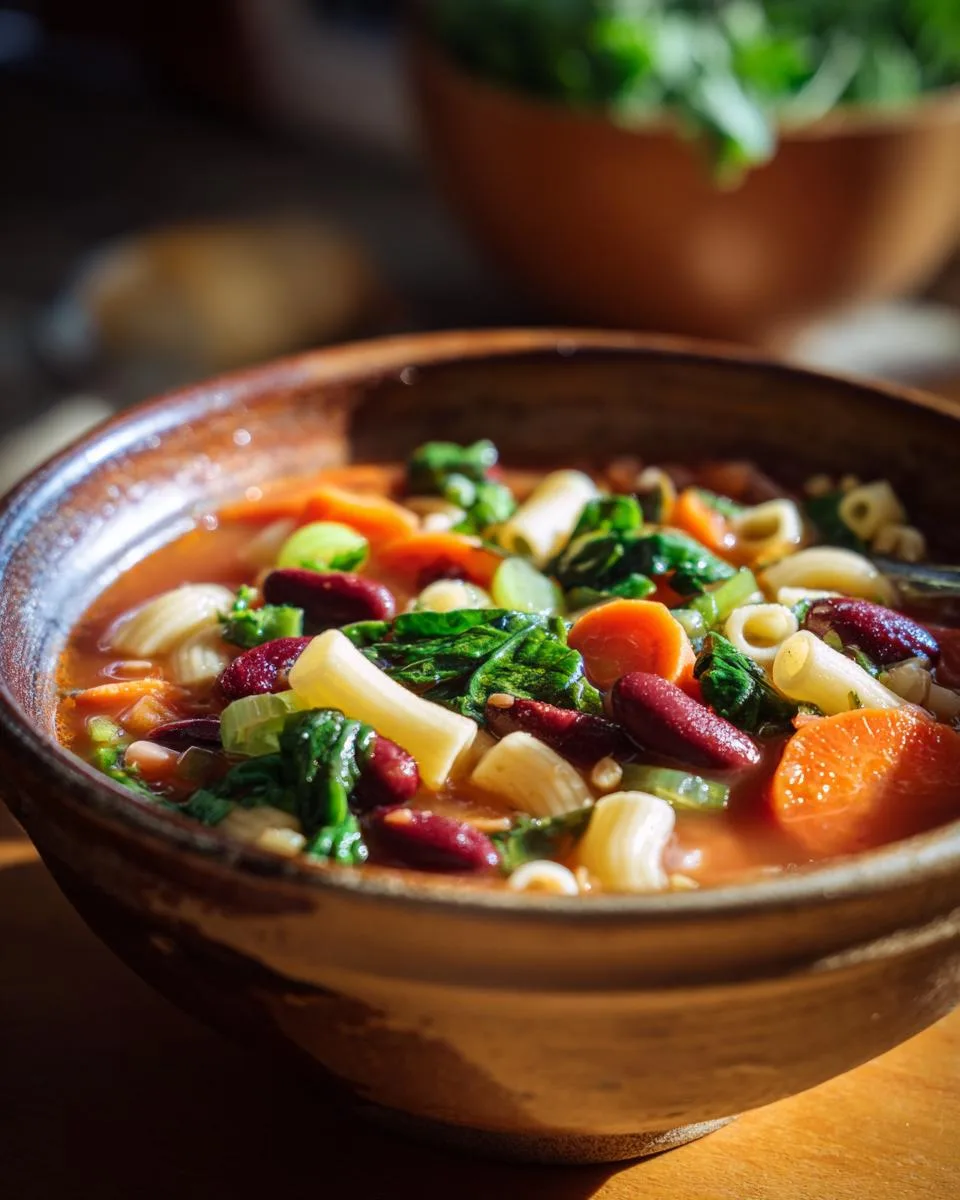
- 1 (15-oz) can dark red kidney beans, drained/rinsed – Their meaty texture holds up beautifully.
- 1 (15-oz) can cannellini beans, drained/rinsed – Creamy counterpart to the kidney beans.
- 1 cup potatoes, diced – Yukon Golds stay firm yet tender.
- ¾ cup ditalini pasta – Those little tubes trap broth like flavor pockets.
- 2 tablespoons tomato paste – Squeeze tube paste is my lazy (but genius) hack.
- 2 bay leaves – Remove these before serving—they’re not for chewing!
- 3 cups baby spinach, roughly torn – Adds vibrant color and iron.
- ¼ cup parsley, chopped – Fresh only—dried tastes like hay here.
- ¼ cup parmesan cheese, freshly shredded – The good stuff, none of that pre-grated sawdust.
- 2 tablespoons butter – Stirred in at the end for luxurious silkiness.
Pro tip: Set everything out before you start—this soup comes together fast once the pot’s hot!
How to Make Traditional Italian Minestrone Soup
Alright, let’s get that pot bubbling! Making minestrone is like conducting a little kitchen symphony—each step builds on the last until everything comes together in perfect harmony. Here’s how to nail it:
Preparing the Vegetables
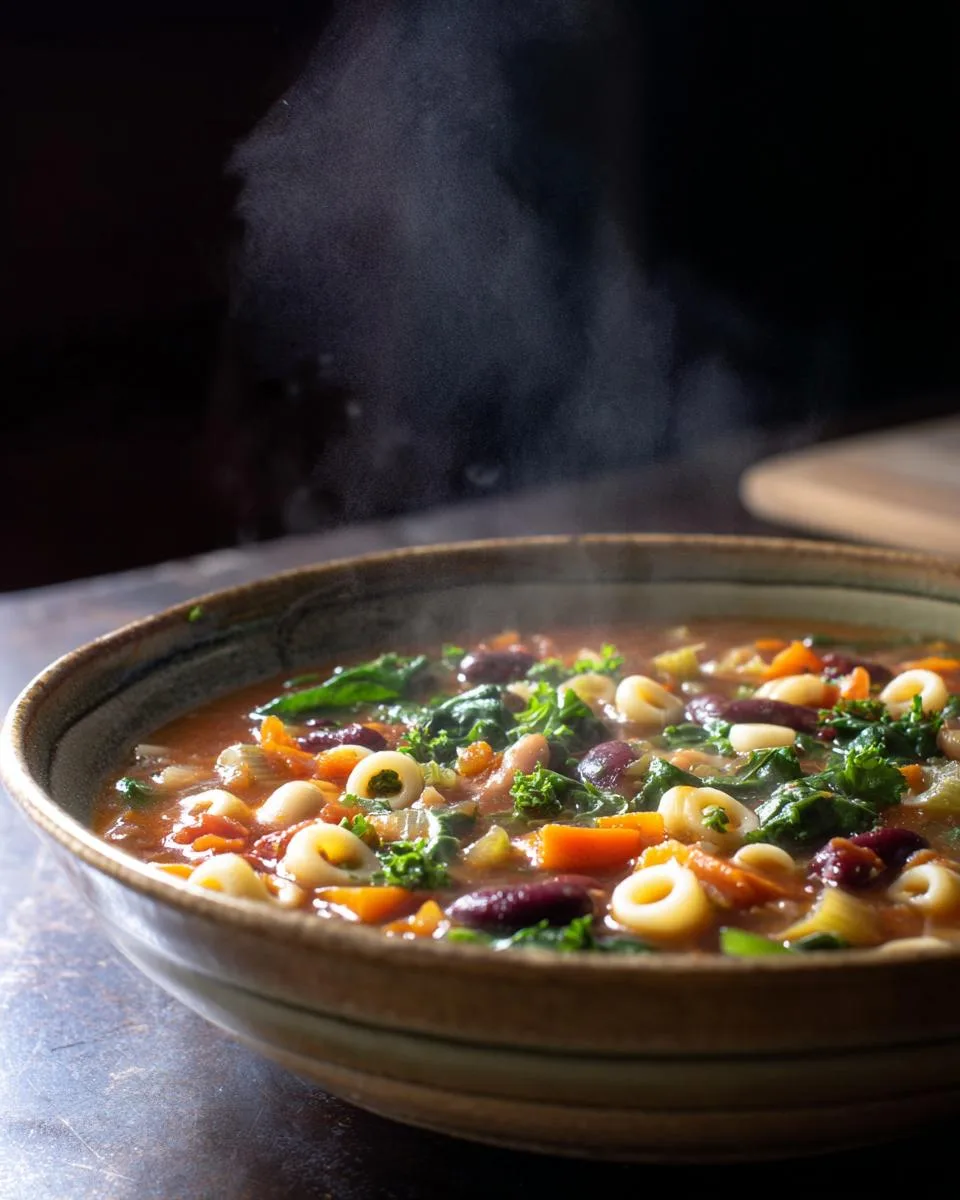
Grab your biggest, heaviest pot (Nonna would approve) and heat the olive oil over medium. Throw in the onions, carrots, and celery—that’s your soffritto, the flavor foundation. Stir occasionally, letting them soften and sweeten for about 5 minutes. You’ll know they’re ready when the onions turn translucent and the whole kitchen smells like heaven.
Building the Flavor Base
Time to get messy! Squish those tomatoes between your fingers right into the pot—juices and all. Add the tomato paste, parmesan rind (yes, the whole thing!), and all the spices. Stir like you mean it for 2 minutes until the tomato paste darkens slightly and the spices wake up. That’s your soup’s personality right there.
Simmering the Soup
Pour in the broth and toss in the bay leaves. Bring it to a lively bubble, then dial it back to a gentle simmer for 15 minutes—just enough time to fold laundry or sip some wine. Add the beans and potatoes, then let it go another 15 minutes until the potatoes are fork-tender. Drop in the pasta and cook until al dente (about 8-10 minutes). The broth should thicken slightly, hugging every ingredient.
Finishing Touches
Kill the heat and stir in the spinach and parsley—they’ll wilt instantly from the residual heat. Now, the grand finale: swirl in the butter and parmesan until the soup gets that velvety sheen. Taste and adjust the salt (I always need another pinch). Fish out the bay leaves and parmesan rind—unless you want a chewy surprise!
Voilà! Ladle it into bowls, top with more parmesan, and watch how fast it disappears. The pasta will keep absorbing broth, so if you’re saving leftovers, undercook it slightly or add extra broth when reheating.
Print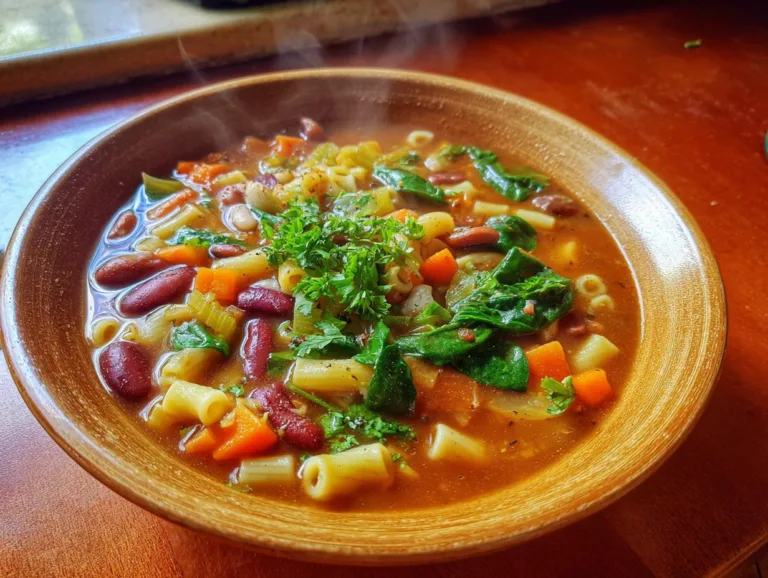
Traditional Italian Minestrone Soup Recipe That You’ll Love!
A hearty and flavorful Traditional Italian Minestrone Soup packed with vegetables, beans, and pasta. Perfect for a comforting meal.
- Total Time: 60 minutes
- Yield: 6 servings 1x
Ingredients
- 1 Cup onion, diced
- ¾ Cup carrots, shredded or chopped
- ½ Cup celery, chopped
- 2 Tablespoons olive oil
- 1 Can stewed tomatoes, 15-Ounce can of whole tomatoes
- 1 Rind parmesan cheese
- 1 ½ Teaspoons garlic powder
- 1 Teaspoon onion powder
- 1 Teaspoon Italian seasoning
- ¾ Teaspoon salt, or more to taste
- ½ Teaspoon black pepper
- ¼ Teaspoon red pepper flakes
- 6 Cups vegetable broth, or chicken broth or beef broth
- 1 Can dark red kidney beans, 15-Ounce can, drained and rinsed
- 1 Can cannellini beans, 15-Ounce can, drained and rinsed
- 1 Cup potatoes, diced
- ¾ Cup ditalini pasta, dried
- 2 Tablespoons tomato paste
- 2 bay leaves, dried
- 3 Cups baby spinach, roughly torn
- ¼ Cup parsley, chopped
- ¼ Cup parmesan cheese, freshly shredded
- 2 Tablespoons butter
- Optional Garnishes: parmesan cheese, freshly grated; parsley, fresh; red pepper flakes; black pepper
Instructions
- In a large soup pot, saute the onions, celery, and carrots with the olive oil until they begin to gain some color.
- Add the tomatoes to the pot one at a time, crushing each one by hand as you drop them in, reserve the tomato juices. Add the tomato paste, parmesan rind, garlic powder, onion powder, Italian seasoning, salt, black pepper, and red pepper flakes. Sauté together for just a couple minutes.
- Add the juices from the tomatoes, broth, and bay leaves, bring to a light boil then reduce heat and let simmer for 15 minutes.
- Carefully, give the soup a taste, add additional salt, pepper, or red pepper flakes as preferred.
- Add both of the beans, and the potatoes, let simmer for another 15 minutes.
- Add the pasta and cook until the potatoes are soft and pasta is al dente.
- Add the spinach and parsley, and stir.
- Add the butter and parmesan, stir. Once the butter and parmesan have melted the soup is ready to serve. Garnish with optional grated parmesan, black pepper, red pepper flakes or fresh parsley.
Notes
- Use fresh vegetables for the best flavor.
- Adjust seasoning to your taste.
- Store leftovers in an airtight container in the fridge for up to 3 days.
- Prep Time: 15 minutes
- Cook Time: 45 minutes
- Category: Soup
- Method: Stovetop
- Cuisine: Italian
- Diet: Vegetarian
Nutrition
- Serving Size: 1 bowl
- Calories: 320
- Sugar: 6g
- Sodium: 800mg
- Fat: 10g
- Saturated Fat: 3g
- Unsaturated Fat: 6g
- Trans Fat: 0g
- Carbohydrates: 45g
- Fiber: 10g
- Protein: 12g
- Cholesterol: 10mg
Tips for the Best Traditional Italian Minestrone Soup
After years of stirring pots (and a few happy accidents), I’ve picked up tricks that take this minestrone from good to “Nonna would be proud” status:
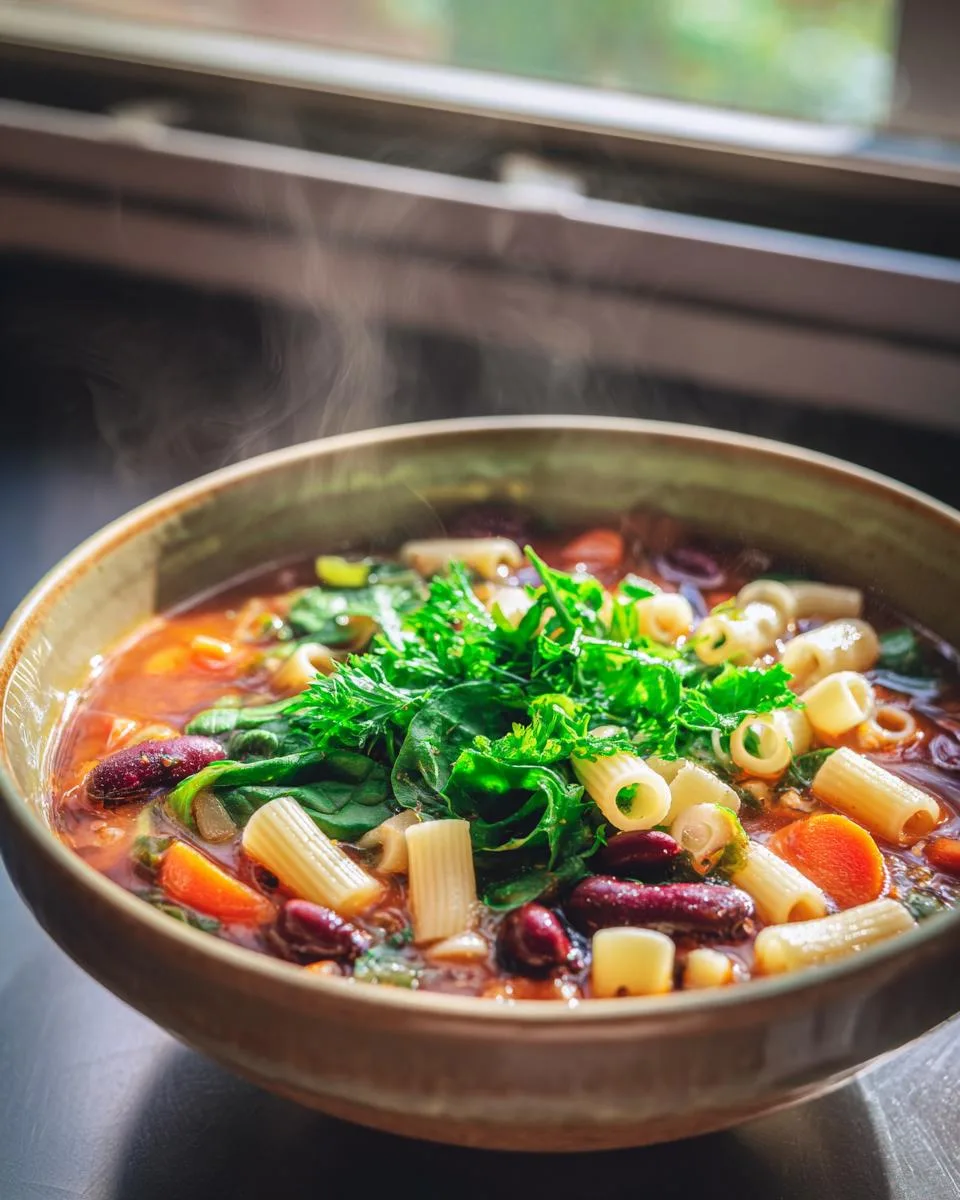
- Fresh herbs make all the difference: Swap dried parsley for fresh—it’s like switching from black-and-white to technicolor!
- Spice it your way: Love heat? Double the red pepper flakes. Prefer mild? Skip ’em entirely. Taste as you go!
- Pasta pro tip: Cook ditalini separately if meal-prepping, then add to bowls—keeps it from turning mushy in leftovers.
- Broth boost: Simmer the parmesan rind longer (up to an hour) for extra umami magic—just fish it out before serving.
- The butter secret: Stir it in off the heat to prevent separation. Silky soup every time!
Remember: minestrone is forgiving. No carrots? Use sweet potatoes. No spinach? Try kale. The soup gods are flexible!
Variations of Traditional Italian Minestrone Soup
Here’s the beautiful thing about minestrone—it wants you to play around! Over the years, I’ve twisted this recipe more ways than spaghetti on a fork, and here are my favorite riffs:
- Greens swap: Kale or Swiss chard stand in beautifully for spinach—just chop them finer and add earlier to soften.
- Bean bonanza: Chickpeas or borlotti beans work if you’re out of kidney/cannellini. Even lentils (cooked separately) add great texture!
- Pasta alternatives: Gluten-free? Use quinoa or rice instead. Tiny star-shaped pastina makes it extra cute for kids.
- Winter version: Swap potatoes for butternut squash and add a sprig of rosemary—cozy perfection.
- Summer twist: Toss in fresh zucchini and yellow squash last-minute for crunch, skip the potatoes.
The rule? Whatever makes your taste buds happy! Minestrone’s been adapting for centuries—your kitchen’s just the latest stop on its delicious journey.
Serving Suggestions for Traditional Italian Minestrone Soup
Oh, the joy of serving minestrone! It’s practically begging for a crusty loaf of pane toscano—that saltless Italian bread perfect for sopping up every last drop of broth. If I’m feeling fancy, I’ll rub the bread with garlic and drizzle it with olive oil for bruschetta vibes.
A simple arugula salad with lemon and shaved parmesan cuts through the soup’s richness beautifully. And don’t even think about skipping extra grated parm on top—it’s like the edible equivalent of a cozy blanket.
Storing and Reheating Traditional Italian Minestrone Soup
Here’s the best part—this soup gets even better as leftovers! Let it cool completely, then stash it in airtight containers. It’ll keep in the fridge for 3 days (if it lasts that long).
For longer storage, freeze portions for up to 3 months—just leave out the pasta and add fresh when reheating. To bring it back to life, warm it gently on the stove with a splash of broth or water to loosen it up. The butter and parmesan might separate a bit—just give it a good stir, and it’ll come together like magic.
Pro tip: If you froze it with pasta, expect it to be softer—still delicious, just not al dente. Now, who’s ready for round two?
Nutritional Information for Traditional Italian Minestrone Soup
Here’s the scoop on what’s in your bowl (roughly—your ingredients may vary slightly): Each serving packs about 320 calories, with 10g fiber and 12g protein to keep you full. It’s got vitamin A from the carrots, iron from the spinach, and that glorious parmesan adds calcium.
Remember: These numbers are estimates—your exact amounts will depend on your veggie sizes, broth sodium levels, and how generously you sprinkle that cheese on top! But hey, with this many veggies and beans, you’re basically eating sunshine in liquid form.
Frequently Asked Questions About Traditional Italian Minestrone Soup
I get asked about this soup all the time—here are the burning questions (and my very opinionated answers!):
“Can I freeze minestrone?”
Absolutely! Just leave out the pasta and add it fresh when reheating. The soup freezes beautifully for up to 3 months. Thaw overnight in the fridge, then warm gently—you might need to add a splash of broth to loosen it up.
“What if I don’t have parmesan rinds?”
Don’t panic! Toss in a tablespoon of nutritional yeast or a slice of cheddar—it won’t be the same, but it’ll still be delicious. (Though I strongly recommend hoarding rinds in your freezer like a cheese dragon!)
“Can I make it gluten-free?”
Easy peasy! Swap the ditalini for GF pasta, rice, or quinoa. Just cook it separately and add to bowls so it doesn’t turn to mush in leftovers.
“Help—my soup got too thick!”
That’s the pasta doing its thirsty thing. Thin it with broth or water when reheating. Pro tip: Under-cook the pasta slightly if you’re planning leftovers.
“Can I use fresh tomatoes instead of canned?”
Sure thing—peel and chop about 4 large ripe ones. But in winter? Canned actually taste better (and save you 20 minutes of peeling frustration!).
Share Your Traditional Italian Minestrone Soup Experience
Nothing makes me happier than hearing how you make this minestrone your own! Did you add extra garlic? Swap in kale? Maybe your nonna’s secret twist?
Drop a comment below—I read every one. And if you loved it, snap a photo and tag me on Instagram! Let’s keep this soup story going.
For More recipes, Follow me on Facebook!